
Local SEO for Plumbing Companies: The Complete Guide to Ranking in Your Service Area
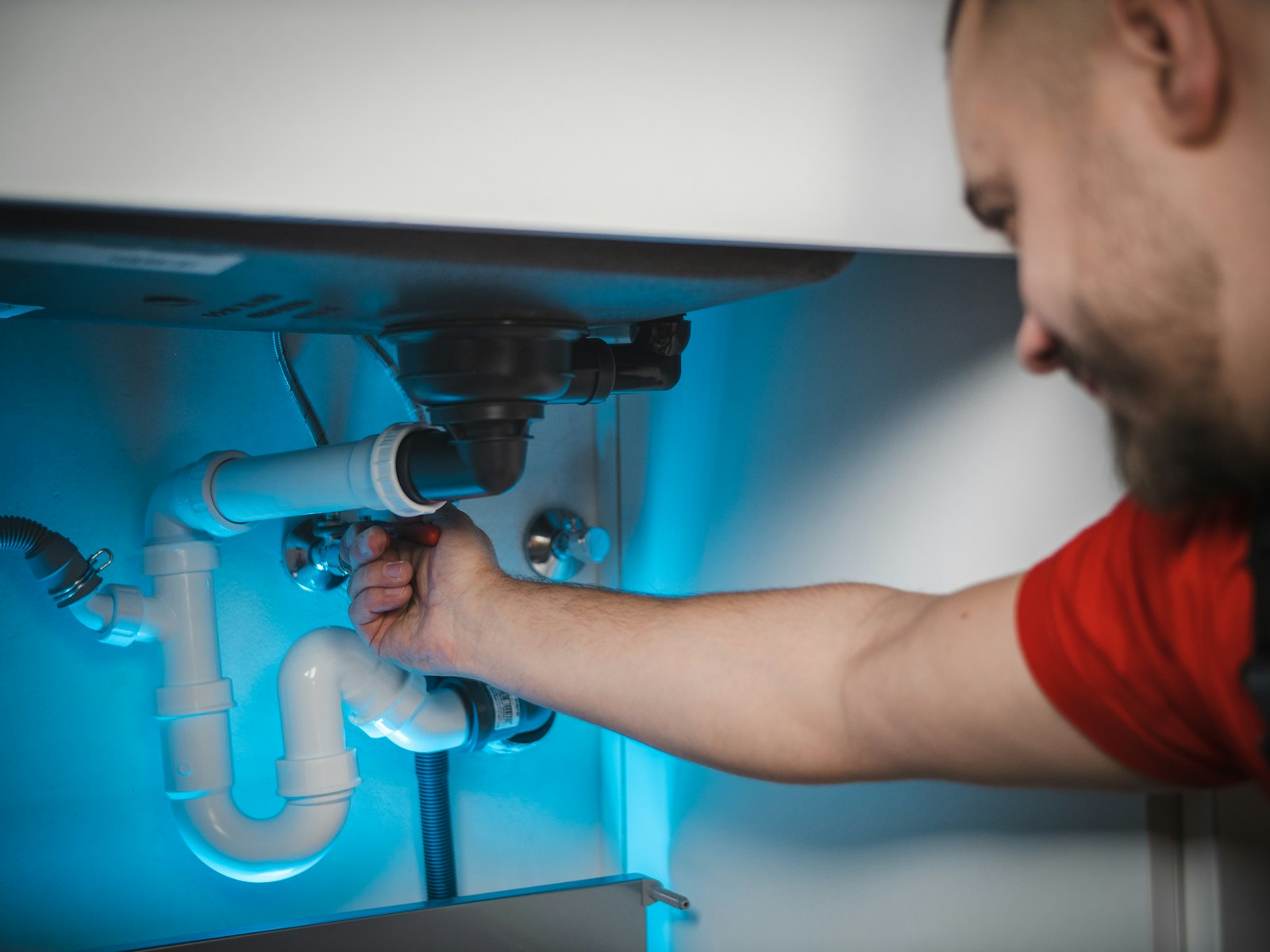
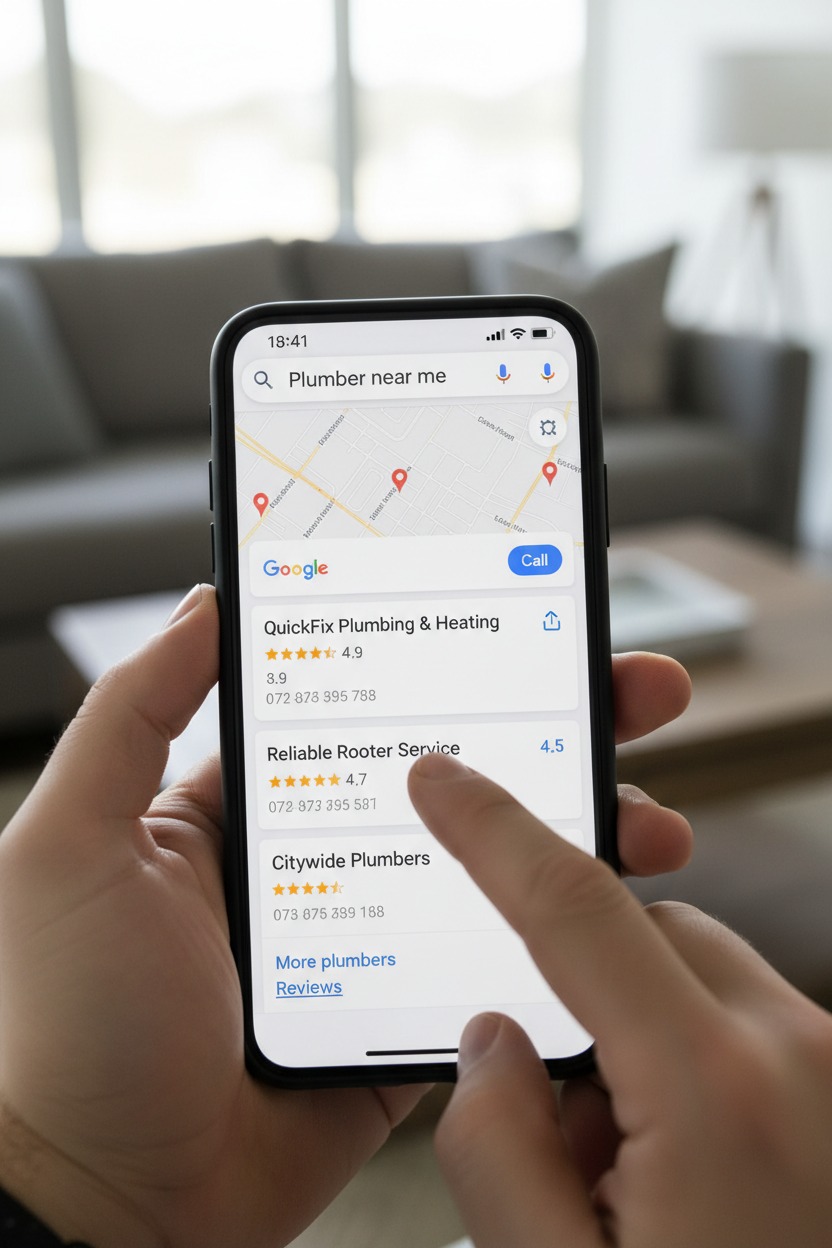
Most plumbing work starts with a phone and a bad moment. Water under the sink, a water heater that quit overnight, a toilet that will not stop running. The homeowner types a few words into Google, looks at the three businesses in the map, and calls one of them. Local SEO for plumbers is everything that decides whether your company is one of those three.
I taught for years before moving into SEO, so I will explain the mechanism first, then what to do about it.
Why Local SEO Matters More for Plumbers Than Most Trades
Plumbing has one of the shortest paths from search to phone call of any home service. Someone with a leaking supply line is not comparing quotes for a week. They want someone who looks legitimate, is close, and is open. That puts a lot of weight on the map results and on your Google Business Profile, because that is where the decision happens.
The planned side of the business works differently. Water heater replacements, repiping, sewer line work and fixture upgrades involve more research and bigger tickets. Those customers do click through to websites, read service pages and check reviews more carefully. Good local SEO covers both: a profile that wins the urgent call, and pages that win the considered one.
How Google Decides Which Plumber to Show
Google publishes the three factors it uses to rank local results: relevance, distance and prominence (Google Business Profile Help). Relevance is how well you match the search, distance is how far you are from the searcher, and prominence is how trusted your business looks, judged from reviews, listings and links.
Distance is the one you cannot change. A plumber can rank first when searching from their own shop and barely appear two towns over. That is normal, and it is why the useful question is not “what is my ranking” but “where across my service area do I show up, and where do I not.” Relevance and prominence are what widen that circle.
Start With Your Google Business Profile
For most plumbing companies, the profile does more ranking work than the website, especially for urgent searches. A few fields carry most of the weight.
- Primary category set to Plumber. Profiles set to a broad category like “Contractor” are common, and the primary category is one of the strongest relevance signals you control.
- Every service listed by name. Drain cleaning, tankless water heaters, leak detection and sewer line repair are all searched separately, and each missing service is one less reason for Google to match you.
- Hours that reflect how you really work. If you answer the phone at night or on weekends, the profile needs to say so. A profile showing “Closed” at 10pm will lose that search to a competitor that shows “Open 24 hours.”
- A service area that matches where your trucks go. List the cities and zip codes you actually serve rather than an entire state. A tight, honest area reads as more credible than a sprawling one.
- Fresh photos of real jobs. Your vans, crew and finished installs show the profile is active.
None of this is one-time work. A profile that gets a little attention every month looks more trustworthy than one set up perfectly three years ago and left alone. I go deeper on the profile itself on my Google Business Profile management page.
Build a Page for Every Job That Pays the Bills
A single “Services” page listing ten things gives Google very little to rank. A dedicated page for each job, explaining the work, the signs a homeowner notices, what the visit involves and which areas you cover, gives Google something specific to match and gives the customer a reason to call you instead of the next result.
Start with the jobs that bring in the most profit or volume, which for many plumbing companies means water heaters and drain or sewer work, then planned projects like repiping. I walk through how I map those pages for plumbing specifically on the SEO for Plumbers page.
Citations and NAP Consistency
A citation is any listing of your business name, address and phone number, often shortened to NAP, on sites like Yelp, Angi, the Better Business Bureau, Nextdoor or your local chamber of commerce. Google compares those listings with your profile and website. When they agree, it is a quiet vote of confidence. When they disagree, it is a reason for doubt.
Plumbing companies collect these mismatches as they grow: an owner’s old cell number, a shop move, a name change after a partner left. Cleaning them up is unglamorous, and usually worth more than adding new listings on top of the mess. If you use call tracking, keep your main number as the primary one on every listing so tracking does not create new conflicts.
Reviews: The Signal Customers and Google Both Read
Reviews feed prominence, and they are the part of local SEO a homeowner reads before deciding. Letting a stranger into your home on a bad day is a trust decision, and recency matters as much as the total. A profile with a handful of reviews from two years ago looks less active than one with a steady stream from the last few months.
The system is simple: ask every satisfied customer the same day with a direct review link by text, then reply to every review calmly and specifically. Never buy reviews or offer discounts for them, which breaks Google’s policies and can get a profile restricted.
How to Improve Local SEO for Plumbers: A Practical Order of Work
If you are doing this yourself, the order matters more than the speed.
- Week one: fix the profile. Category, services, hours, service area and fresh photos. These are the fastest changes to make.
- Weeks two to four: clean up your listings. Search your business name and old phone numbers, then correct the directories that show outdated details.
- Month two onward: build service pages. One page per high-value job, in order of what pays best, each linked to the areas you serve.
- Ongoing: reviews and replies. A same-day review request after every job, and a reply to every review within a few days.
Profile fixes can change how you appear within weeks. Broader movement across your service area usually builds over several months. I will not put a date or a position on that, because no one outside Google controls the results. If the consistency is the hard part, my plans are listed openly on the pricing page, and the full monthly scope is on the local SEO services page.
Local SEO for Plumbers: FAQ
Why is local SEO important for plumbers?
Most plumbing jobs start with a nearby search, and the customer usually calls one of the first few companies Google shows in the map. Local SEO is how you become one of those companies across your service area instead of relying only on referrals and repeat customers.
Do plumbers need a website for local SEO, or is a Google profile enough?
A profile alone can win some urgent calls, but a website gives Google and customers far more to go on, especially for planned jobs like water heater replacement or repiping. The profile and the site work best together, each one confirming the other.
Is SEO still worth it for plumbers with AI search taking off?
Yes. AI tools and Google’s AI answers lean on the same public information local SEO builds: your profile, reviews, listings and clear service pages. A plumbing company that is well documented online is easier for both search engines and AI tools to recommend accurately. More on that on the answer engine optimization page.
See Where Your Plumbing Company Stands Today
Send me your business name and website. Within 3 business days, I will put together an audit of your Google Business Profile, your website and the plumbers you compete with, then walk you through it on a call, including what I would fix first.